

Looking after stainless steel
Stainless steel stands up well in busy food service kitchens, but it still needs the right cleaning routine and a bit of care. A simple daily habit helps surfaces stay cleaner, look better and last longer in Cape Town conditions.
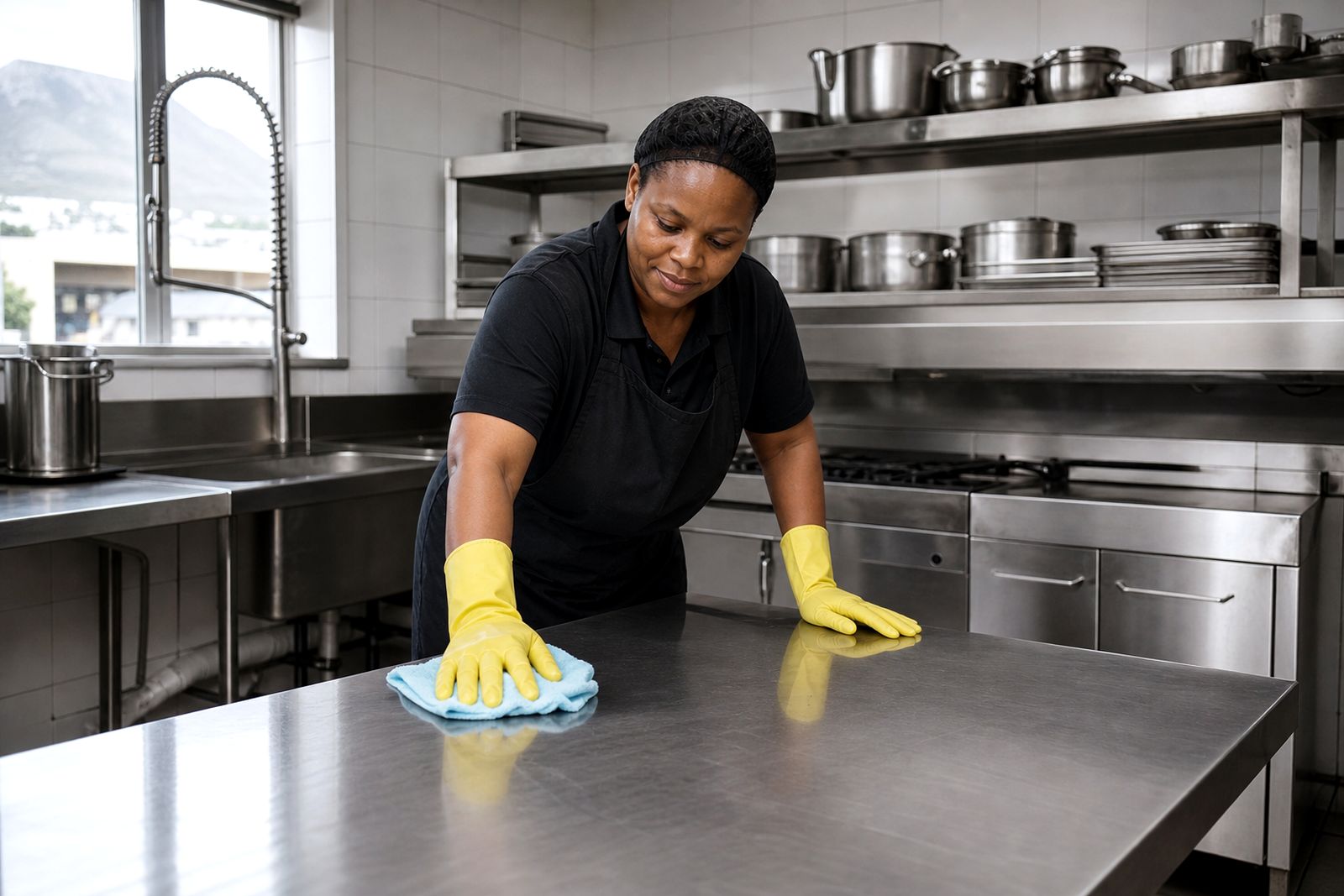
Why stainless steel still needs regular care
Stainless steel is widely used in restaurants, hotels, canteens, takeaways and production kitchens because it handles wet work, heat and frequent cleaning better than many other materials. Even so, it is not stain-proof or damage-proof. Food acids, salt, grease, hard water and cleaning chemical residue can all mark the surface if they are left too long.
In the Western Cape, coastal air can make the problem worse. Salt in the air settles on exposed surfaces, especially near doors, pass areas and delivery points. In a hot kitchen, splashes dry quickly and leave mineral marks. If staff wipe with the wrong cleaner or scrub across the grain too hard, the finish can dull faster than expected. A few minutes of proper cleaning at the end of a shift usually saves much bigger cleanup work later, and it keeps prep and serving areas looking presentable for longer.
Daily cleaning steps for worktops, shelves and equipment covers
For most stainless steel surfaces, the best routine is still warm water, a mild detergent and a soft cloth. Clean while the dirt is fresh where possible. If grease has built up during service, let the detergent sit briefly before wiping. Rinse properly, then dry the surface with a clean cloth so water spots do not sit overnight.
Always wipe in the direction of the grain if the finish has a visible line. Circular scrubbing can leave the surface patchy, and rough pads can leave fine scratches that trap dirt. In busy kitchens this small detail matters more than people think.
- Remove loose crumbs, food scraps and packaging dust first.
- Wash with warm water and mild detergent using a soft cloth or non-abrasive sponge.
- Pay attention to undersides of lips, splashbacks, handles and corners where grease collects.
- Rinse with clean water so detergent residue does not dry on the steel.
- Dry fully with a clean lint-free cloth.
- On front-facing panels, give a final wipe with the grain for a neater finish.
For serving counters and prep areas used through the day, a quick mid-shift wipe can stop dried-on mess later. That extra pass helps a lot in takeaway kitchens where sauces, vinegar and salt are used heavily.
What to avoid if you want the finish to last
Most damage to stainless steel comes from the wrong cleaner, the wrong tool or dirty water left sitting too long. Harsh treatment may not show on day one, but after repeated use the surface starts looking tired and is harder to keep clean. Once scratched deeply, it can also hold more grime around joints and folds.
- Do not use steel wool or harsh wire scourers.
- Do not leave bleach, chloride-heavy cleaners or strong sanitisers sitting on the surface longer than directed.
- Do not use abrasive powder cleaners on brushed finishes unless the product is clearly suitable.
- Do not leave wet cardboard, opened tins or damp cloths standing on stainless steel overnight.
- Do not drag pots, trays or crates across counters and shelves.
- Do not ignore leaks under sinks, around taps or near machine connections.
Even plain tap water can leave marks if it is hard and dries slowly. If you see cloudy patches after cleaning, the problem is often residue rather than damage. A proper rinse and dry usually sorts it out. If marks remain, clean gently again rather than reaching straight for a stronger chemical, thats where many surfaces get spoiled.
Dealing with fingerprints, tea stains, grease and light rust marks
Different marks need slightly different treatment. Fingerprints on front panels and doors usually come off with warm soapy water and a dry buff. Grease around cooking lines may need a degreasing cleaner suitable for stainless steel, used exactly as directed and then rinsed away. Tea and coffee splashes around beverage stations can leave brown marks if they stand too long, while water around sinks can leave a chalky edge.
Light orange spotting is often called rust by staff, but it is frequently surface contamination rather than the stainless steel itself breaking down. This can happen when ordinary steel particles land on the surface from nearby fabrication work, worn tools or rough scourers. Clean it early before it spreads.
- For grease: use a suitable food-service degreaser, rinse well and dry.
- For tea, coffee and food dye marks: wash promptly before they dry hard.
- For water spotting: rinse with clean water and dry fully after each clean.
- For light surface staining: use a cleaner made for stainless steel, following the label carefully.
- If staining keeps returning in one area, check for drips, chemical splash or poor ventilation nearby.
If a mark does not lift with normal cleaning, avoid aggressive scraping. It is better to assess the cause first, especially on counters, splashbacks and machine panels that customers can see from the front of house.
Special care around sinks, grease traps and cooking lines
Sinks and wet areas work harder than almost any other stainless steel item in a commercial kitchen. They deal with detergent, food waste, hot water, acidic liquids and wet utensils all day. Pot sinks and prep sinks should be rinsed through after heavy use and wiped dry where possible at close. This is especially important around basket strainers, welded corners and drain boards.
Grease trap areas should be kept clean around lids and access points so residue does not sit on the surrounding steel. Follow the service schedule required for the unit, and remember that municipal and compliance requirements apply to grease waste handling. If there is a plumbing issue, have it checked by a qualified installer or service technician rather than letting water seep around the fitting.
On cooking lines, pay attention to sides of fryers, range splashbacks and the lower sections of oven stands where oil mist settles. These areas often look clean from a distance but build up a sticky film over time. Once that film bakes on, it becomes much harder to remove without marking the finish.
A simple weekly check for damage and wear
A weekly walk-through helps catch small issues before they turn into expensive repairs or hygiene problems. This is useful for owner-run takeaways, school kitchens, guesthouse kitchens and larger hotel operations alike. Pick a quiet time and inspect the same points each week so nothing gets missed.
- Check for loose handles, shelf brackets and fasteners.
- Look for black residue, sticky edges or dried grease around folded seams.
- Inspect sink seals and areas around taps for slow leaks.
- Check castors and trolley frames for trapped dirt and thread.
- Look underneath benches for rust-coloured staining caused by wet floors or chemical splash.
- Make sure cleaning cloths, pads and chemicals being used by staff are suitable for stainless steel.
If you notice repeated staining in the same place, review both the cleaning method and the way the area is being used. A kettle left dripping, salt stored open on a shelf, or a wet mop leaning against a table leg can create a recurring problem that looks like a material fault when it is really just daily wear in the wrong conditions.
What our Catering Equipment customers say
Verified Google reviews
Questions we get asked
Can I use bleach on stainless steel catering equipment?
It is best to avoid bleach and other chloride-heavy cleaners unless the product instructions clearly state it is suitable and it is used exactly as directed. If a strong sanitising product is used, do not leave it sitting on the surface and rinse well afterwards.
Why does stainless steel get marks near the coast?
Salt in coastal air, damp conditions and poor drying can leave residue on the surface. In Cape Town kitchens, regular rinsing and drying is important, especially near doors, windows and delivery areas.
What is the safest everyday cleaner for stainless steel?
For routine cleaning, warm water, a mild detergent and a soft cloth are usually enough. Wipe with the grain where visible, rinse properly and dry the surface to prevent water spotting.
Also worth a look

Ask for a quote
Send a note through our contact form with the equipment you are looking at, the kind of kitchen it is for and your delivery town, and our sales team will reply with a quote.
Open the contact form