

Gas or electric cooking equipment
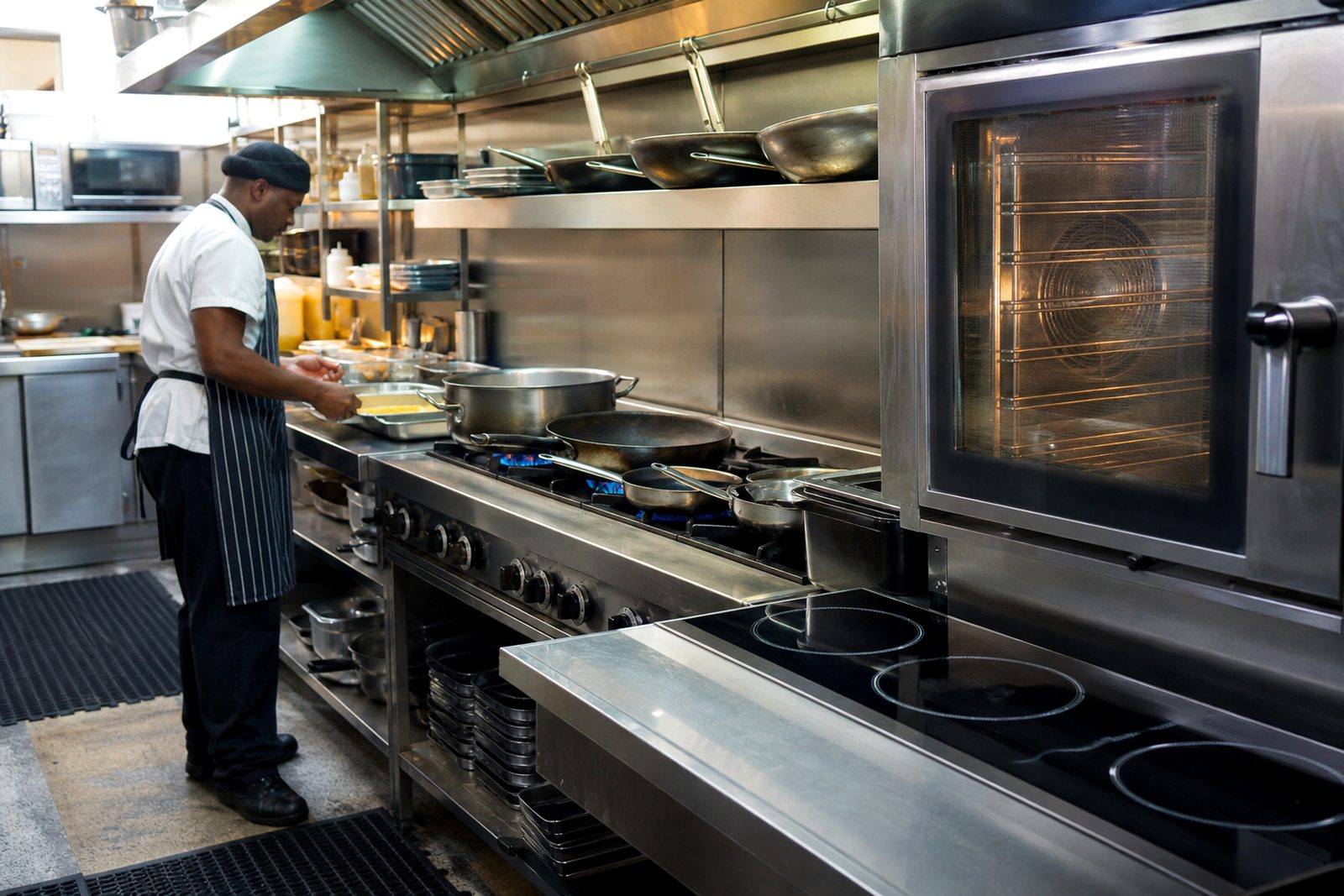
Most commercial kitchens end up with a mix of gas and electric. Decide which fuel suits each station before you pick models or ask for a quote.
Start with the menu, not the fuel
The right answer depends on what you cook and how fast you need it. A shawarma and chips takeaway has very different needs from a hotel banqueting kitchen or a bakery that runs ovens from four in the morning.
Write down your top ten dishes and which station each one uses. You will quickly see where open flame matters, where steady even heat matters more, and where the equipment just needs to hold food at temperature.
- Searing, wok work and pan cooking usually favour gas burners.
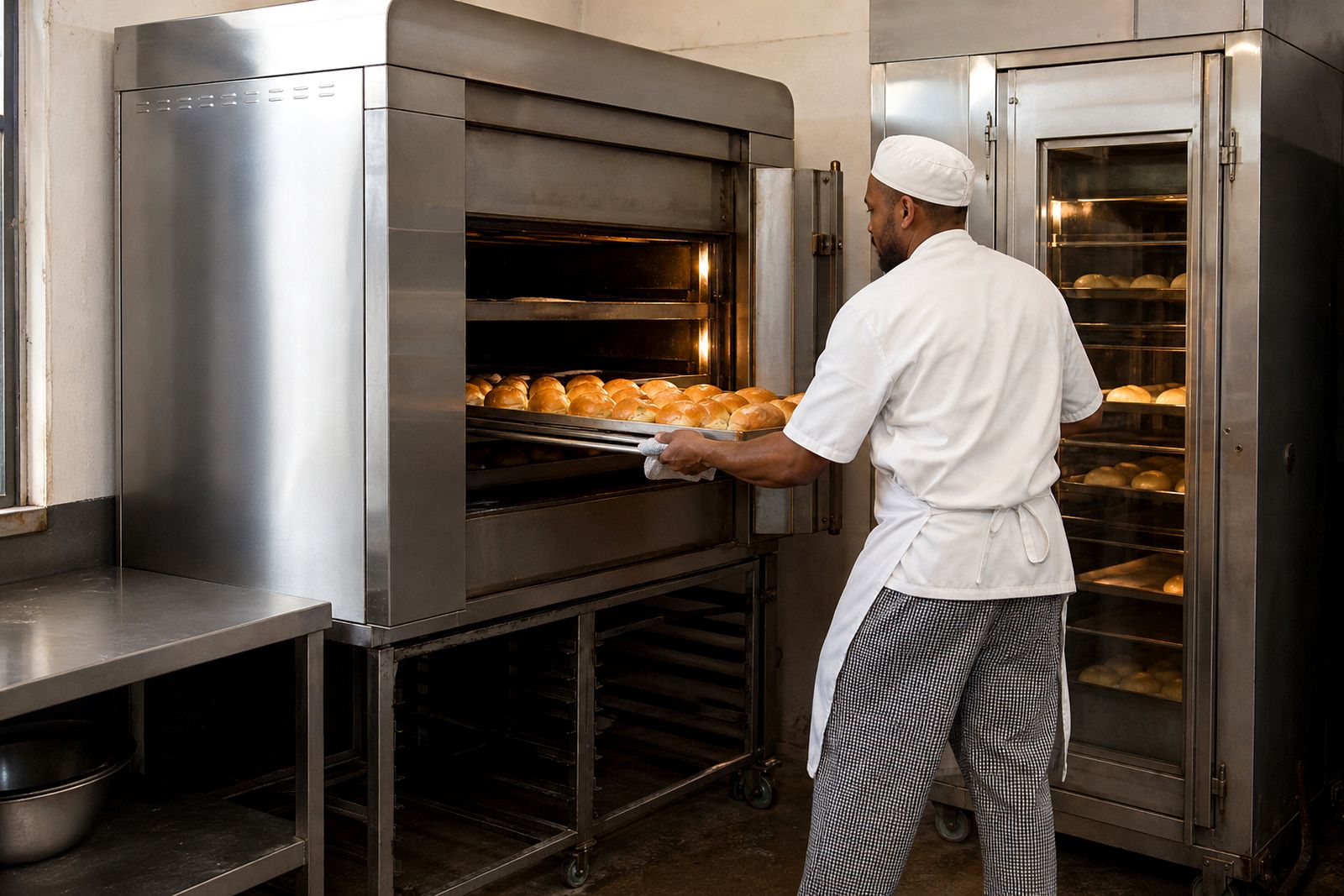
- Baking, roasting and proving usually favour electric convection ovens.
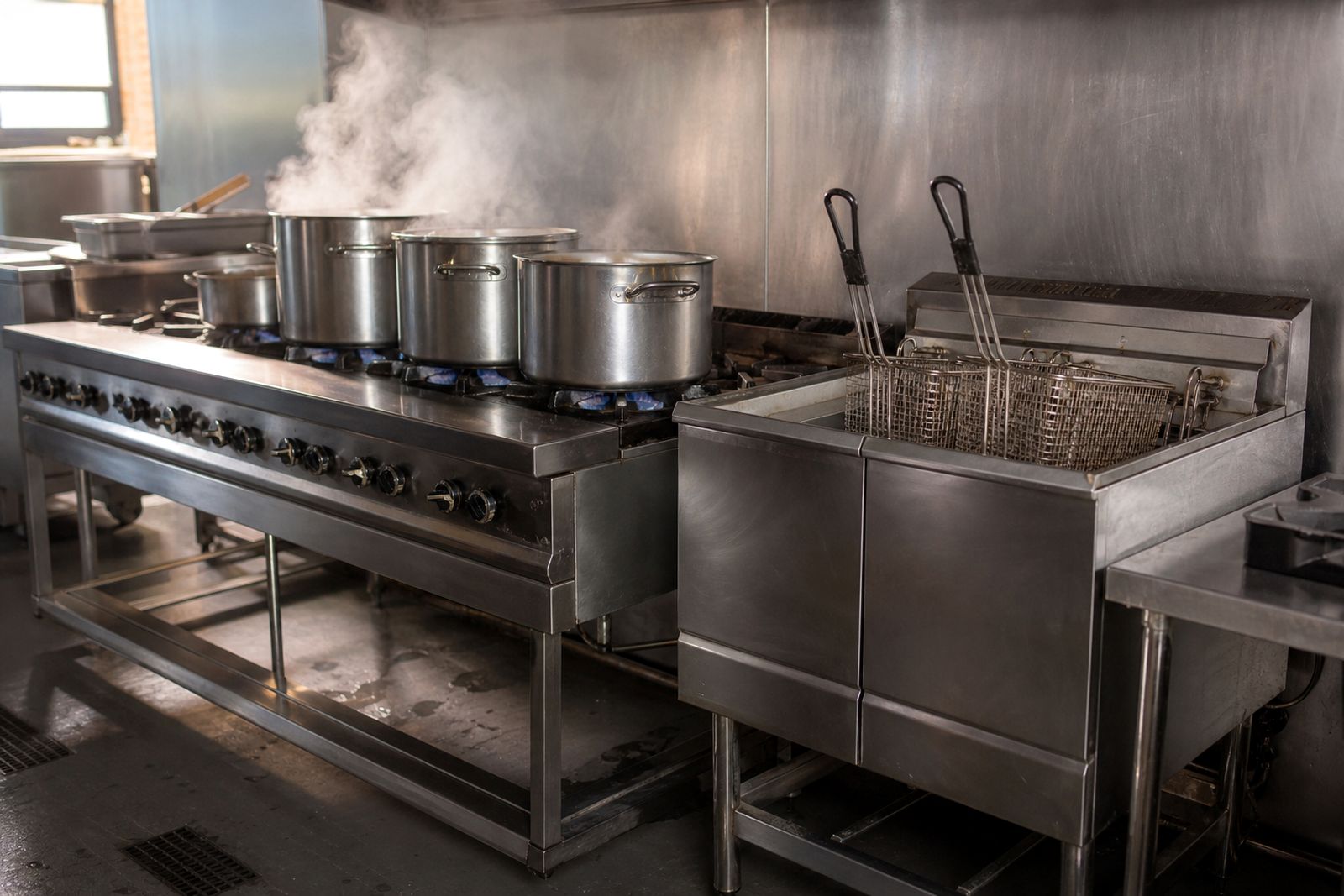
- Frying works well on both, so it often comes down to site services.
- Holding and warming is almost always electric.
Where gas still wins on the line
Chefs like gas for instant, visible heat. You turn the knob and the pan responds straight away, which matters on a busy à la carte pass. Heavy duty gas ranges and boiling tables also handle big stock pots without fuss.
Gas also keeps you cooking when the power goes off. In South Africa that is not a small thing. A gas range, griller or fryer with manual ignition means service can carry on through load shedding, as long as extraction and lighting are planned for too.
- Instant heat control for pan and wok cooking
- Handles large pots and long simmering
- Keeps key stations running during power cuts
- Needs a compliant gas installation and certificate of conformity
Where electric makes more sense
Electric equipment gives very even, repeatable heat. Convection ovens, combi style ovens, proofers and bain maries all rely on that. Bakeries and canteens that cook the same trays every day tend to prefer electric for consistency.
Electric units also put less heat and combustion fumes into the room, which can help in small kitchens where ventilation is limited. The trade off is the supply. Big ovens and fryers draw serious current, so check your board and your landlord before you commit.
- Even heat for baking, roasting and proving
- Less heat load in a small room
- Simple to place where there is no gas line
- Needs enough electrical capacity on site
Check your site services first
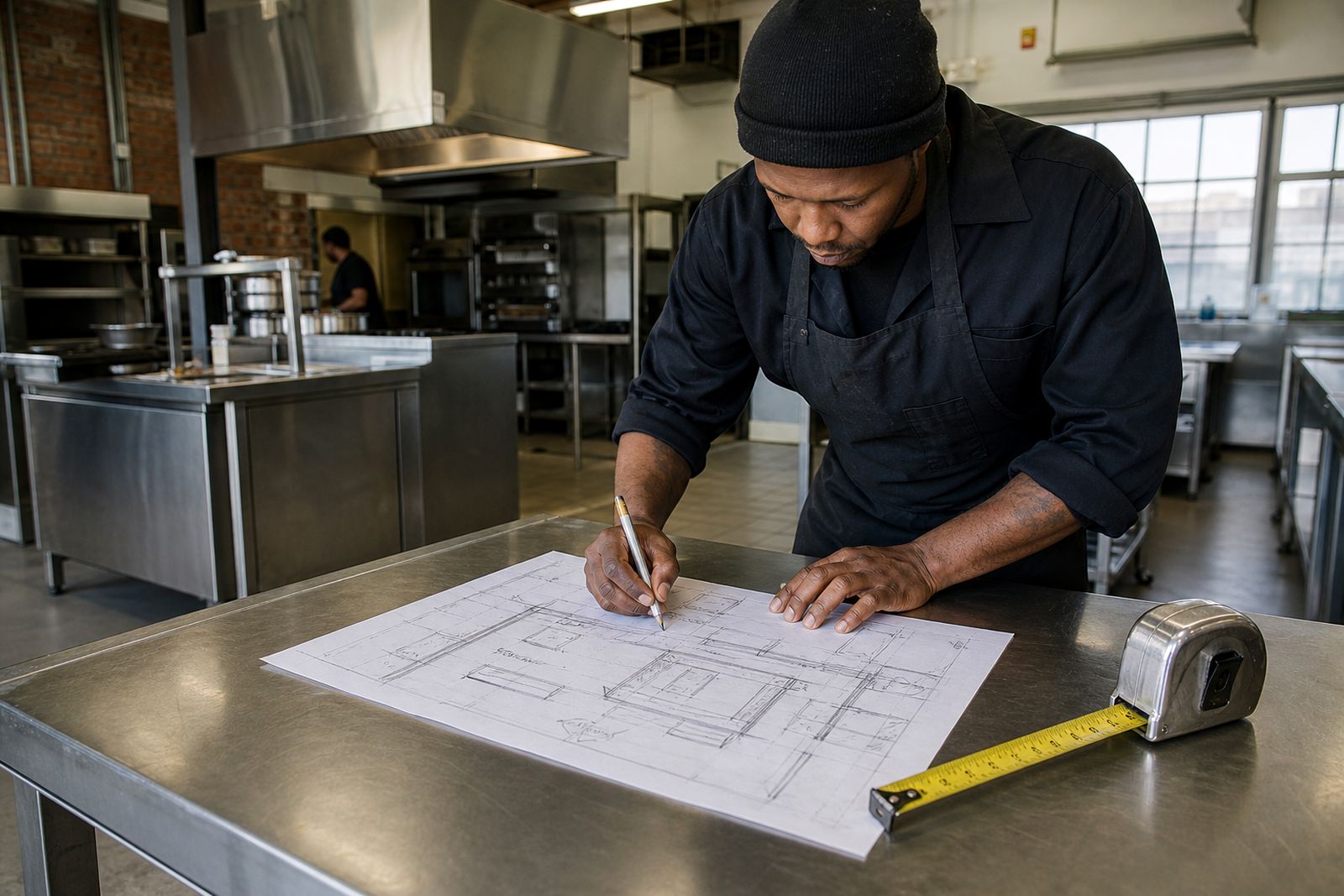
Before choosing, find out what the building can actually support. Many tenants in older Cape Town buildings find out late that the gas line is too small, or the electrical board cannot take another three phase unit.
Ask your electrician and gas installer to confirm capacity, and share the answers with us in your enquiry. It saves going back and forth on models that will not work in the space.
- Is there a gas supply, or will you use LP gas cylinders and a cage outside?
- What is the electrical supply, single phase or three phase?
- How much spare capacity is on the distribution board?
- Does the extraction canopy cover every heat source on the line?
Running a mixed line
The most common setup we see is gas on the front line for ranges, grillers and fryers, with electric ovens, warmers and a proofer behind. That gives chefs the flame they want while keeping baking and holding steady.
If load shedding is a concern, think about which stations must keep working. Some kitchens keep one gas fryer and a gas range as the backup line, and run the rest on electric when the power is on.
Cleaning and day to day care
Both types need regular cleaning to stay safe and efficient. On gas units, keep burner ports clear and check flames burn blue and even. On electric units, keep elements, fans and door seals clean and dry.
Whatever the fuel, the stainless bodies need the same care as the rest of your kitchen steel. Our guide on looking after stainless steel covers the daily routine.
What our Catering Equipment customers say
Verified Google reviews
Questions we get asked
Can I convert a gas unit to LP gas or natural gas later?
Many commercial gas units can be set up for either LP gas or natural gas with the right jets and settings, but it must be done by a registered gas installer. Ask us which models allow it before you order.
Is electric always more expensive to run?
Not always. It depends on your tariff, gas price and how the unit is used. Ovens that run full trays all day can be very efficient on electric. Compare the menu load, not only the price per unit of energy.
What should I send with my enquiry?
Send the stations you need, your top dishes, whether you have gas, and your electrical supply. Photos of the cooking line area help a lot.
Also worth a look
Ask for a quote
Send a note through our contact form with the equipment you are looking at, the kind of kitchen it is for and your delivery town, and our sales team will reply with a quote.
Open the contact form