

Dish and glass washers
Coastal Metal supplies under counter and hood type dish and glass washers for restaurants, hotels, canteens, takeaways and bars. We help Cape Town kitchens choose machines that suit service volume, crockery type and the site services already in place.
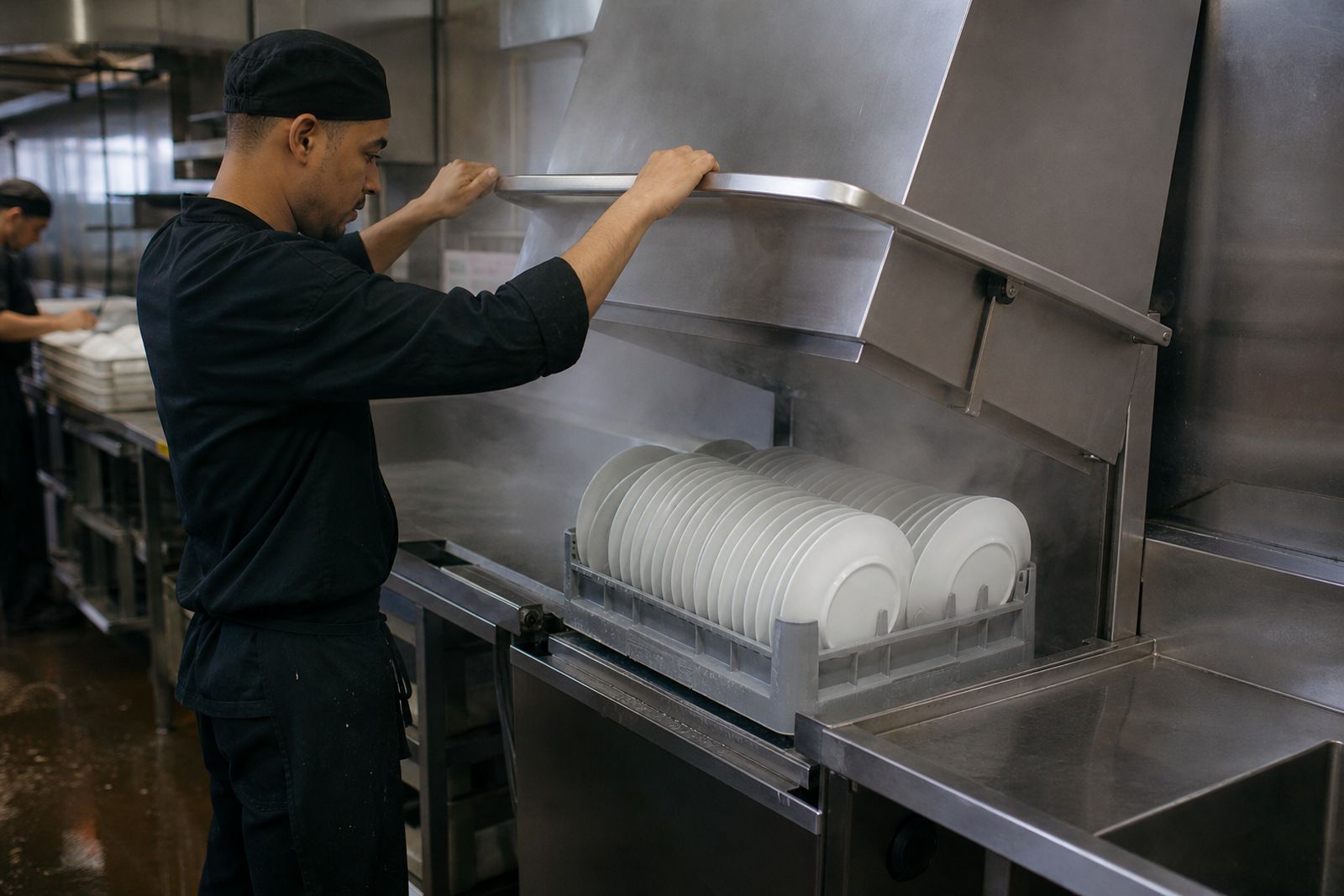
What these machines are used for
Dish and glass washers are commercial wash machines built for repeated service through the day, faster recovery between cycles and better wash consistency than a domestic unit. In food service they are used for plates, side plates, cups, saucers, cutlery, trays, glassware and light kitchenware, depending on the machine type and basket layout.
For smaller sites, an under counter machine keeps the footprint compact and suits bars, coffee points and kitchens with limited floor area. For busier service, a hood type machine gives a straighter wash flow and makes more sense where staff are loading and clearing racks continuously. In Cape Town, where many sites work in older buildings with tight back of house areas, the available doorway width, drain position and water point often decide which format is practical.
Machine types, sizes and working limits
Under counter machines fit below a worktop line and are generally chosen for glass washing, cup washing and lower to medium dish volumes. Hood type machines stand as part of a wash-up line, with tabling on either side, and are better where service is heavier and staff need to move racks through quickly. Some kitchens try to make one small machine do every wash task, but that usually slows service and causes breakages on delicate items.
- Under counter glass washer: Best for bars, cafés and front counter drink service. Suits glasses, cups and light bar items. Not ideal for large dinner plates, deep bowls or bulky prep ware.
- Under counter dish washer: Better for small restaurants, guest houses and takeaway kitchens with moderate plate washing. It can handle mixed crockery and cutlery with the right baskets, but not heavy pots or large gastronorm pans.
- Hood type dish washer: Suits canteens, hotels and busier restaurants. Good for repeated rack loading during service, especially when paired with infeed and outfeed tabling. It still is not a pot wash machine.
Basket format, door opening height and plate clearance matter more than many buyers expect. Tall stemware, oversized pasta bowls and platters can be the first issue on site, so tell us the largest items you need to wash. If your kitchen runs hard over lunch and supper with very little gap between, say so early. That changes the recommendation.
Where they suit and where they do not
These machines suit hospitality and food service spaces where quick turnaround, hot rinse sanitation and consistent results matter. They are common in restaurants around Woodstock, the City Bowl, the Atlantic Seaboard and Winelands venues, but they are just as useful in school canteens, staff dining areas and clubhouses. For bars near the coast, a dedicated glass washer helps keep service moving while reducing handling damage.
- Good fit: restaurants, hotels, coffee shops, bars, canteens, takeaways and production kitchens with plated service.
- Possible with planning: small sites with restricted drainage, older municipal connections or limited extraction nearby.
- Not the right tool: heavy black pot washing, bakery trays with baked-on residue, butcher equipment with heavy fats, or any site expecting a domestic-style machine to cope with all-day trade.
Where menus produce lots of burnt-on starch, oil or protein residue, pre-rinsing and sorting become important. A machine can only wash properly if the ware going in is suitable for machine washing and not overloaded. Staff habits matter a lot here and poor loading can make a good machine look bad.
Site requirements and compliance
Before supply, we need to know the available floor space, entry route and where the machine will sit in relation to sinks, grease management and the service pass. Dish and glass washers need the right water supply, waste point and electrical connection for the selected unit. A qualified installer must handle the installation, and the relevant municipal and compliance requirements apply.
For hood type machines, allow proper room for loading and unloading racks, stacking clean ware and placing dirty baskets without crossing traffic. In tight kitchens this is often more important than the machine width itself. If your area is affected by power cuts, tell us how often and for how long, because restart routine and wash flow planning may matter to your operation somtimes.
- Stable water supply and suitable pressure.
- Drain point in a workable position for the machine selected.
- Electrical supply matched to the unit specification.
- Level floor and enough clearance for door or hood operation.
- Nearby pre-rinse or scrap sink where the wash load requires it.
Daily care and practical upkeep
A commercial wash machine needs simple but regular care. The biggest causes of poor results are blocked jets, dirty filters, incorrect chemical setting and hard water scale. In coastal areas around Cape Town, stainless exteriors should be wiped down and dried, especially in humid service zones near open doors or sea air exposure. Keep chloride-heavy cleaners away from the machine body and never use steel wool on stainless surfaces.
At closing, operators should drain down where applicable, remove and rinse filters, clear scraps from wash arms and leave the unit clean inside. Glass washers benefit from frequent water changes during busy bar service because lipstick, sugar and fruit pulp build up quickly. If a machine starts leaving spotting, cloudy glasses or food residue, the first checks are usually water quality, detergents, rinse aid and loading pattern before assuming a fault.
What to tell us when you enquire
The more detail you send through the contact page, the easier it is to point you to a suitable machine and basket setup. We can also advise whether an under counter unit is enough or whether your wash-up area really needs a hood type line with tabling and sink support.
- Type of site, such as restaurant, hotel, canteen, takeaway or bar.
- Main items to be washed, for example glasses, dinner plates, bowls, trays or mixed crockery.
- Approximate service pattern, including quiet periods and peak rushes.
- Available space, including width, depth and height limits in millimetres.
- Whether the machine is replacing an old unit or going into a new fit-out.
- Photos of the wash area, drains and nearby sinks if available.
- Your town in the Western Cape or, if outside the province, where freight will be delivered.
If you need a quotation, use the enquiry form on our contact page and include as much site detail as you can. Ask for a quote and we will come back with options suited to your kitchen.
What our Catering Equipment customers say
Verified Google reviews
Questions we get asked
Can one machine wash both glasses and plates?
Sometimes yes, but it depends on the basket setup, clearance and your service pattern. Sites with busy bar trade often do better with a dedicated glass washer and a separate dish machine.
Do these machines wash pots and heavy kitchen pans?
No, not as a main pot wash solution. Dish and glass washers are meant for racks of crockery, cutlery, glasses and similar service items, not heavy black pots or bulky cookware.
What should I send for an accurate quote?
Send the site type, the items you wash, peak trading periods, available space, photos of the area and whether you need under counter or hood type guidance. Use the enquiry form on our contact page.
Also worth a look
Ask for a quote
Send a note through our contact form with the equipment you are looking at, the kind of kitchen it is for and your delivery town, and our sales team will reply with a quote.
Open the contact form