

Prep sinks, pot sinks and grease traps
Coastal Metal supplies stainless prep sinks, pot sinks and grease traps for restaurants, hotels, canteens, takeaways and food service kitchens. We manufacture and source practical wash-up and waste-handling equipment from Cape Town, with freight to the rest of South Africa.
What these units are used for
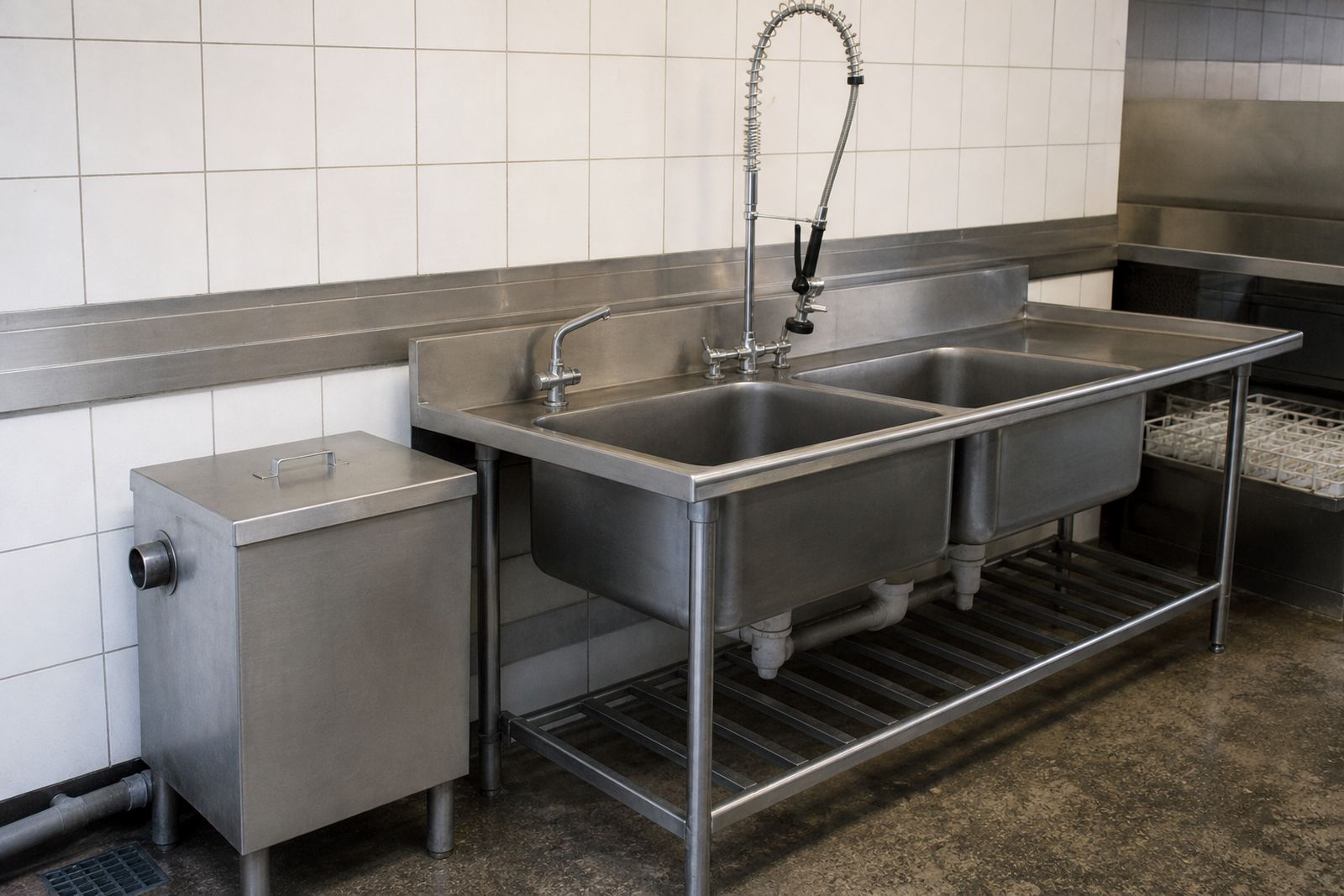
Prep sinks, pot sinks and grease traps handle the wet side of a working kitchen. They cover vegetable washing, thawing, rinsing, utensil washing, pot wash and the control of fats, oils and food solids before waste water reaches the drain line.
In most commercial kitchens these items work together. A prep sink is usually kept for food handling only. A pot sink is for heavier wash-up with larger bowls and stronger underframes. A grease trap sits in the waste line to help separate grease and solids from water before discharge, which matters for hygiene and for municipal drain requirements.
- Prep sinks: suited to rinsing produce, draining containers and light wash tasks.
- Pot sinks: suited to trays, stock pots, inserts, gastronorm pans and utensils.
- Grease traps: suited to kitchens producing greasy waste water from wash-up and food prep areas.
For small takeaway kitchens a compact single bowl sink may be enough in one area, while a hotel scullery often needs double or triple bowl pot sinks with long drainers and a correctly sized grease trap. The right choice depends on workflow, not just floor space.
Sizes, layouts and working limits
We supply standard stainless options and can also assist with custom fabrication where the room shape or service points make a standard unit awkward. Common layouts include single, double and triple bowl sinks, left or right hand drainers, splashbacks and undershelves. Bowl depth, overall length and leg spacing must match what the kitchen actually handles each day.
Prep sinks are usually shallower and easier to work at during food preparation. Pot sinks generally have deeper bowls and heavier gauge tops to deal with the weight of water-filled cookware. Grease traps are chosen around expected flow and the amount of greasy waste, but oversizing a unit for a very tight space can create access problems for cleaning.
- Available as floor-standing or wall-adjacent layouts.
- Single, double or triple bowl configurations.
- Optional drainers, splashbacks and undershelves.
- Grease trap layouts for under-sink, floor or external service areas where allowed.
These products are not ideal for every job. A prep sink should not become the main heavy pot wash point in a busy canteen, and a small under-sink grease trap may not suit a high-output restaurant with long trading hours. If the kitchen sees hard water, coastal humidity or frequent power cuts affecting dishwashing equipment, a practical manual wash-up area becomes even more important.
Where they suit and where they do not
Prep sinks fit well in salad sections, bakery prep rooms, butchery support areas and general food prep zones where staff need a clean rinse point away from dirty wash-up. Pot sinks suit sculleries, back-of-house wash lines, school kitchens, staff canteens and takeaway production rooms with constant pan washing.
Grease traps suit almost any site where food service waste water contains fats or suspended solids, especially restaurants, grills, fryer lines and kitchens with regular pot washing. In many towns and municipal areas around the Western Cape, compliance requirements around grease management can be strict, so it helps to plan the trap early instead of trying to squeeze it in later.
They are less suitable where there is not enough service access for cleaning, where floor falls are poor, or where the waste route has not been checked by the installer. A grease trap hidden behind fixed joinery or boxed in without access usually becomes a maintenance problem quite quickly, and then odours start.
Site and installation requirements
Before you order, check the service points and the working area around the sink. Door widths, passage turns, wall positions and floor levels matter just as much as the sink size. For grease traps, the waste line route, access for opening and cleaning, and municipal discharge rules all need to be considered from the start.
Installation must be handled by a qualified installer and the relevant municipal and compliance requirements apply. We do not give plumbing or drainage installation instructions, because each site differs and approval conditions can vary between buildings and local authorities.
- Confirm overall width, depth and height available on site.
- Confirm waste outlet position and existing drain route.
- Check whether a splashback is needed against tiled or painted walls.
- Allow room to remove baskets, lids or strainers for cleaning.
- For grease traps, allow proper maintenance access from day one.
If your kitchen is in a humid coastal area such as Cape Town, Table View, Somerset West or Hermanus, stainless remains a sensible choice, but the surrounding finishes and fixings should also be chosen properly by the installer to avoid early corrosion on non-stainless parts.
Care and day-to-day use
Good stainless equipment lasts better when staff keep it clean and do not let food waste or chemical residue sit for long periods. Rinse surfaces after service, wipe them dry where practical and keep steel wool and harsh chloride cleaners away from the metal. On grease traps, routine emptying and cleaning is the difference between a tidy waste system and constant odour complaints.
Pot sinks take more abuse than most kitchen items, so welded joints, legs and waste fittings should be checked as part of normal maintenance. If a sink rocks on an uneven floor, get it corrected early before the movement starts stressing the joints. A blocked basket strainer can also slow down wash-up more than people expect.
- Clean bowls and drainers daily with suitable non-abrasive products.
- Remove food solids before they enter the waste line.
- Do not leave salty or acidic liquids sitting overnight.
- Inspect grease traps on a regular schedule based on kitchen output.
What to tell us when you enquire
When you use the enquiry form on our contact page, give us the practical details first. That lets us guide you to a standard unit where it fits, or suggest a custom stainless option if the kitchen has awkward corners, a fixed service point or a specific wash-up flow.
Please tell us what the sink will be used for, what equipment or containers need to fit inside the bowl, and whether the unit is for prep only or heavy wash-up. For grease traps, tell us what type of kitchen you run and where the trap would need to sit in relation to the sink and drain line.
Useful details include your town, overall space available, preferred bowl count, whether you need a drainer or splashback, and whether freight is required outside Cape Town. Photos of the area and rough measurements help a lot, even if they are not perfect.
Ask for a quote through the contact form and we will advise on suitable prep sinks, pot sinks and grease traps for your kitchen setup.
What our Catering Equipment customers say
Verified Google reviews
Questions we get asked
Do I need a separate prep sink and pot sink?
In many kitchens yes. A prep sink helps keep food handling separate from dirty wash-up, while a pot sink is built for heavier utensils and cookware. The final layout depends on your menu, volume and available floor space.
Can you supply a grease trap for a takeaway or small restaurant?
Yes, we can assist with grease trap options for smaller sites as well as larger commercial kitchens. The correct choice depends on the waste-water load, available access and what the local authority requires.
Do you make custom sink units?
Yes. If a standard sink does not suit the room, service points or workflow, we can assist with custom stainless fabrication. Send measurements, photos and a short description through the contact form.
Also worth a look
Ask for a quote
Send a note through our contact form with the equipment you are looking at, the kind of kitchen it is for and your delivery town, and our sales team will reply with a quote.
Open the contact form