

Slicers
Coastal Metal supplies commercial slicers for meat, cheese and deli prep in restaurants, hotels, canteens, takeaways and food service kitchens. We help you choose a machine that suits your product, shift pattern and prep volume, with freight from Cape Town to the rest of South Africa.
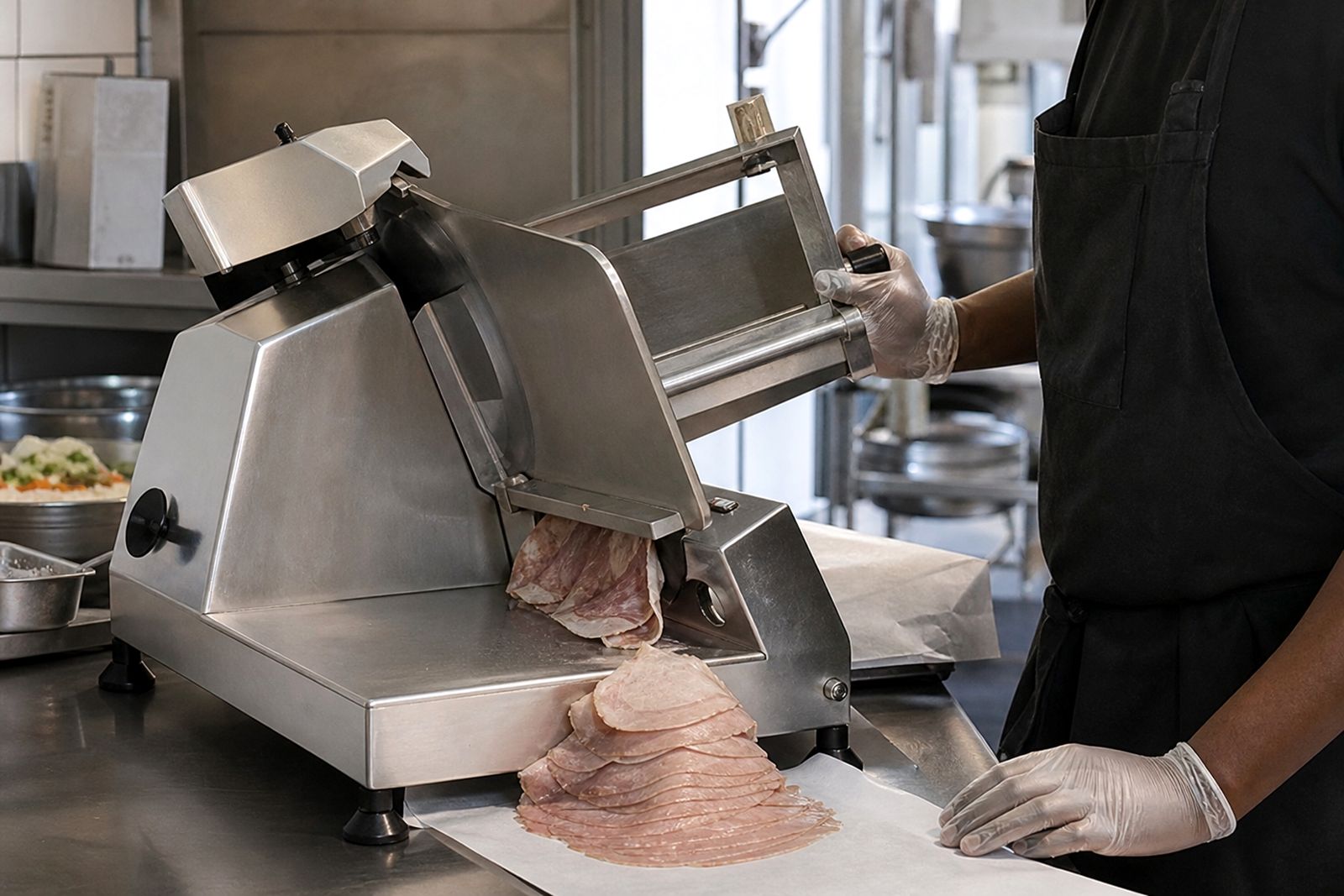
What a commercial slicer is used for
A commercial slicer is built to produce even slices for service, prep and portion control. In a working kitchen that means neater sandwich fillings, more consistent plated portions and less waste from hand cutting. Typical products include cooked meats, deli loaves, cheese blocks and similar items prepared for cold service or quick assembly.
These machines suit back of house prep areas, deli counters, canteens and hotel kitchens where the same products are sliced every day. They are less suitable for items with bone, very hard frozen product, or anything outside the maker’s intended duty. If your team needs to process tougher raw product or mixed prep tasks, we can point you toward a better fit rather than forcing the wrong machine into the job.
- Useful for cooked meats, cold cuts, cheese and deli portions.
- Helps keep slice thickness more uniform during busy service.
- Can reduce prep time where repeated slicing is part of the daily run.
- Not intended for bone-in cuts or products that are too hard or too frozen.
Sizes and options, and their working limits
Slicers are usually chosen by the type of product being cut, the size of the item on the carriage and how often the machine will run through the day. Smaller bench units can suit lighter deli work and narrower products. Mid-size units are often a practical choice for mixed meat and cheese prep. Heavier units are better where the kitchen handles longer shifts, firmer product and larger joints or loaves.
There are also differences in carriage travel, guard style, control layout and whether the machine is aimed at lighter counter use or steady production use. Cheese can be more demanding than many operators expect, especially in warm rooms, so the product type matters as much as the physical size. Very soft product may drag or tear if it is not chilled properly first.
- Bench-top options for lighter prep and tighter spaces.
- Heavier duty options for repeated slicing through a full service day.
- Manual operation for kitchens that want direct control of each pass.
- Choice depends on product shape, firmness and the slice finish you need.
When we discuss working limits we look at the real job, not just the brochure line. Tell us whether you are slicing cured meats, cooked roasts, polony, cheese or deli loaves, and whether staff need wafer-thin slices, sandwich slices or thicker portions. That gives a much clearer picture of what will cope well in your kitchen.
Where slicers work best in the kitchen
Slicers work best where prep can be kept organised and clean, with a dedicated section for receiving product, slicing, weighing or portioning, and storing the finished trays. In sandwich shops and takeaways they help speed up assembly. In hotels and canteens they are useful for breakfast meats, cold buffet prep and portioning for service. In butcheries or mixed prep rooms, placement matters because fine meat dust, moisture and heavy traffic can make cleaning harder.
For Cape Town and the Western Cape, coastal humidity can affect product handling, especially cheese and cooked meats waiting on the counter. It helps to keep product chilled until needed and to avoid placing the slicer where hot cooking lines or direct sun warm the area. A calm prep corner often gives a cleaner result and safer operation.
- Good fit for sandwich stations, delis, canteens and hotel prep rooms.
- Best used near chilled storage and portioning space.
- Less suited to cramped corners with poor cleaning access.
- Keep away from wet wash zones and heavy flour or grease fallout.
Site needs and installation considerations
A slicer needs a stable, level surface with enough room around it for loading, slicing, clearing finished portions and cleaning down. The machine should not be squeezed hard against a wall, because staff need access to the carriage area, guards and surrounding counter. Good lighting is important, and so is a sensible workflow that keeps raw and ready-to-serve items properly separated where your menu requires it.
Electrical connection and any site preparation must be handled by a qualified installer, and the relevant municipal and compliance requirements apply. If your kitchen deals with power cuts, ask about where the slicer will sit in relation to backup supply planning and which other prep equipment shares the same area. We do not give wiring or installation instructions, but we can help you flag the practical questions early.
- Level stainless work surface or suitable equipment stand.
- Clear space for operator movement and safe cleaning access.
- Nearby chilled storage for product waiting to be sliced.
- Qualified installer to attend to electrical connection and site compliance.
Cleaning, care and day to day use
A slicer performs best when it is cleaned often and used with sharp attention to product condition. Warm, greasy or sticky product makes the job harder and can leave an untidy finish. Daily cleaning should include the exposed cutting and carriage areas, guards, handles and surrounding worktop, using food-safe methods suitable for stainless steel and food contact equipment. Avoid harsh chloride-heavy chemicals that can mark stainless surfaces over time.
Operators should work with steady pressure rather than forcing the product through. If slicing quality drops off, the cause may be a dull blade, poor product temperature or an unsuitable machine for the item being cut. Regular inspection by the operator or service technician helps spot wear before it becomes a disruption. A machine that is cleaned properly and used within its intended duty tends to stay more consistent, and easier to live with in a busy prep room.
What to tell us when you enquire
The quickest way to get a suitable recommendation is to give us a clear picture of the job through the enquiry form on our contact page. A slicer for breakfast ham in a guesthouse kitchen is not the same as a slicer for all-day deli cheese and cold meats in a busy takeaway, so details matter a lot.
- What products you need to slice, such as cooked meats, cheese or deli loaves.
- Whether slices need to be very thin, standard sandwich cut or thicker portions.
- How often the machine will run each day and how many operators will use it.
- Whether you need a bench-top setup or a heavier unit for longer shifts.
- The available space in millimetres on the counter or stand area.
- Your town in the Western Cape or elsewhere in South Africa for freight planning.
If the slicer will form part of a wider prep area, mention any related needs like stainless tables, shelving, sinks or trolley access. We can then advise on a practical fit for your kitchen and quote accordingly. Ask for a quote through the contact page.
What our Catering Equipment customers say
Verified Google reviews
Questions we get asked
Can one slicer handle both meat and cheese?
Often yes, but the right choice depends on how firm or soft the cheese is, how often you change products and the finish you expect. Tell us what you slice most often and we will guide you toward a practical option.
Is a slicer suitable for frozen product or bone-in cuts?
No, commercial deli slicers are generally not intended for bone-in cuts or very hard frozen product. Using the wrong machine for that work can affect safety and performance.
Do you deliver outside Cape Town?
Yes. We supply Cape Town and the Western Cape directly, with freight arranged to the rest of South Africa. Send your town and site details through the contact page so we can quote correctly.
Also worth a look
Ask for a quote
Send a note through our contact form with the equipment you are looking at, the kind of kitchen it is for and your delivery town, and our sales team will reply with a quote.
Open the contact form